Every year on 1 January, libraries, archives and cultural institutions around the world quietly (or not so quietly) celebrate Public Domain Day - the day when creative works whose copyright has expired become free for everyone to use, reuse, remix and share.
But Public Domain Day 2026 is something special for Australia. After a 20-year drought, published works are finally flowing back into the Australian public domain.
Why the long wait?
Back in 2005, the Australia-US Free Trade Agreement extended Australia’s copyright term by 20 years, making the standard term for most works life of the author plus 70 years, rather than the previous life of the author plus 50 years.
The result? A 20-year “pause” where no published works entered the public domain in Australia. Copyright still expired for unpublished materials, anonymous works and government publications, but the most popular and prominent publications were frozen.
That changes this year.
For the first time in two decades, thousands of published books, articles, musical compositions and artworks are entering the public domain in Australia - and they’ll keep coming, year after year.
A simpler future for copyright decisions
This shift also makes life much easier for librarians, archivists and anyone else wanting to know the copyright of a work. Until now, different copyright terms applied to published and unpublished material, which made copyright assessment especially tricky when publication status was unclear. From now on, things are simplified, and for most works you will only need to know when the creator died. Whether a manuscript, letter or photograph was published at some point no longer matters. If the author died more than 70 years ago, the work is out of copyright in Australia.
And it keeps happening
This isn’t a one-off. From now on, new works will enter the public domain every year:
- 2026: creators who died in 1955
- 2027: creators who died in 1956
- 2028: creators who died in 1957
…and so on, indefinitely (future legislative changes notwithstanding).
So what’s entering the public domain this year?
The National Library of Australia has a fantastic blog highlighting material in its collections that becomes public domain in 2026, including:
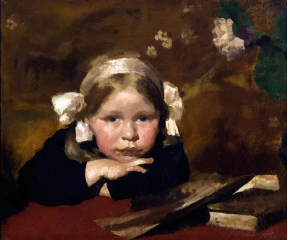
- artworks by Max Meldrum
- designs by architect William Hardy Wilson
- the research papers of Pacific anthropologist Camilla Wedgwood
 .
. 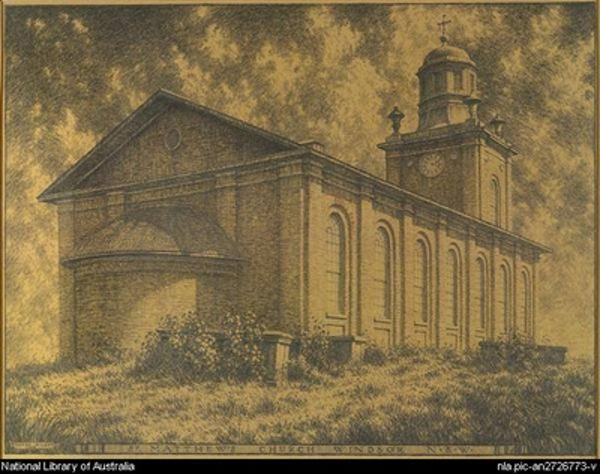
Max Meldrum - AGSA William Hardy Wilson - CAWB
But it’s not just Australian creators. Many internationally significant works are now free to use in Australia as well, including:
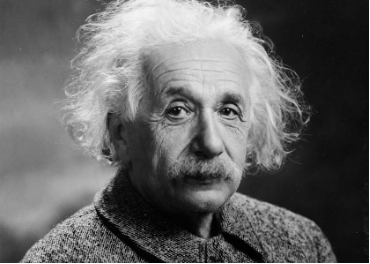
- Albert Einstein’s collected scientific papers
- Charlie Parker’s compositions, including Yardbird Suite
- Death in Venice and other works by Nobel Prize laureate Thomas Mann
- artworks by cubists Marie Laurencin and Fernand Léger
- the Bluey and Curly cartoons by Alex Gurney
- Dale Carnegie’s How to Win Friends and Influence People
 .
. 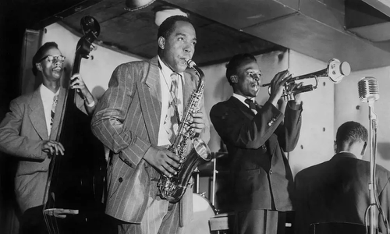
Albert Einstein - Biografie en relativiteitstheorie Charlie Parker - The Master Of Jazz Improvisation | uDiscover Music
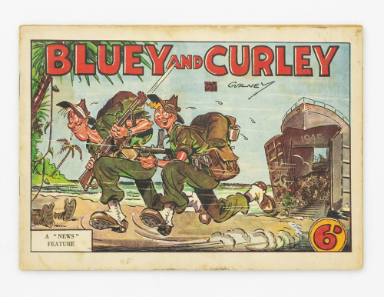
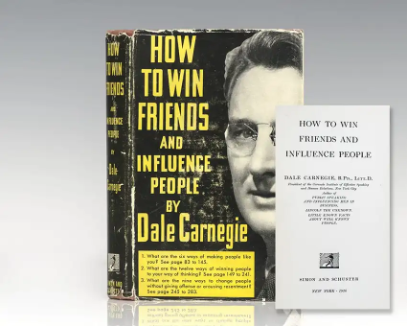
Bluey and Curly, 1945 - A 'News' Feature cover title How to Win Friends and Influence People Dale Carnegie First Edition
A moment worth celebrating
For collecting institutions, researchers and artists alike this is huge. It opens up new opportunities for digitisation, access, reuse and creative engagement, and marks the end of a long, frustrating gap in Australia’s public domain story. Happy Public Domain Day 2026. After 20 years, it’s great to have you back!